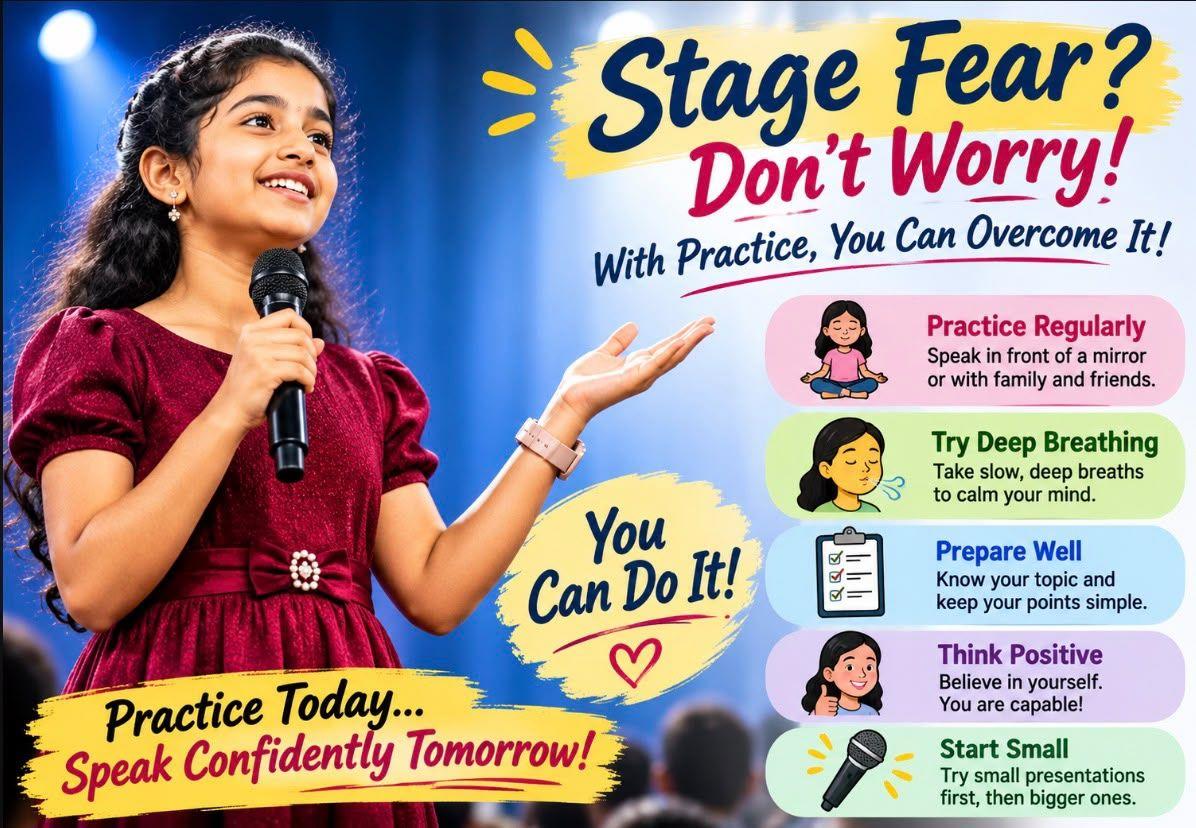
Stage fear in children is a common challenge that many parents face. Some children feel nervous when speaking in front of classmates, performing on stage, singing, dancing, or participating in school competitions. They may worry about making mistakes, forgetting their words, or being judged by others.
As a parent, you may wonder how to help a child overcome stage fear and develop confidence.
The good news is that with patience, encouragement, and regular practice, children can gradually overcome their fear of performing in front of an audience.
In this article, we explore 10 effective ways to help children overcome stage fear, improve public speaking skills, and build self-confidence.
Stage fear, also known as performance anxiety, is the feeling of nervousness or fear that children experience when performing or speaking in front of an audience.
It is a natural emotional response, especially among shy children or those with limited public speaking experience.
Parents should look out for these common signs:
Understanding these signs is the first step towards helping children overcome stage fear.
Before helping your child overcome stage fear, understand what makes them uncomfortable.
Some children fear making mistakes, while others worry about being laughed at or judged by their audience.
Talk to your child gently and encourage them to express their feelings. Listen without criticism or pressure.
Understanding their emotions helps parents provide the right support.
Self-confidence plays an important role in overcoming stage fear.
Encourage your child to participate in everyday activities such as storytelling, singing, drawing, and group discussions.
Appreciate their efforts and celebrate small achievements.
Remember, a confident child is more likely to face new challenges without excessive fear.
One of the easiest ways to overcome stage fear is to practise in a familiar environment.
Parents can organise small activities at home, such as:
Gradually introduce a larger audience as your child becomes comfortable.
Public speaking skills can help children express themselves confidently.
Teach your child to speak slowly, maintain eye contact, use clear pronunciation, and stand comfortably.
Encourage regular conversations at home and allow children to express their opinions.
These activities can improve communication skills and reduce nervousness during stage performances.
Every child is different. Some children develop confidence quickly, while others need more time.
Comparing your child with classmates, siblings, or friends can negatively affect their self-esteem.
Instead of saying, "Why can't you perform like your friend?", appreciate your child's individual progress.
Positive encouragement is more effective than comparison.
Deep breathing can help children manage nervousness before a stage performance.
Encourage your child to:
Practising these simple relaxation techniques can help children feel calmer and more prepared.
School activities provide valuable opportunities for children to develop confidence.
Encourage participation in:
Start with activities your child enjoys. Never force participation when they feel overwhelmed.
Fear of making mistakes is one of the common reasons behind stage anxiety.
Explain that nobody performs perfectly every time. Even experienced speakers and performers make mistakes.
Help your child understand that mistakes are opportunities to learn.
Praise their courage and effort rather than expecting a perfect performance.
Children need to know that their parents believe in them.
Before a performance, say encouraging things such as:
Your support can help your child feel secure and motivated.
Building confidence is a gradual process.
If your child speaks in front of a small group for the first time, celebrate that achievement.
If they participate in a school programme despite feeling nervous, appreciate their courage.
Recognising small improvements encourages children to keep trying.
Helping a shy child overcome stage fear requires patience and understanding.
Parents can encourage confidence through simple daily activities:
A supportive home environment helps children develop emotional security and confidence.
Occasional nervousness before a performance is normal. However, if a child's fear becomes intense or persistent, parents should pay attention.
Consider consulting a child psychologist if your child:
Professional guidance can help identify underlying concerns and provide appropriate support.
Children may experience stage fear because of low self-confidence, fear of making mistakes, shyness, lack of practice, or worries about being judged by others.
Start with small performances at home, encourage regular practice, teach relaxation techniques, and provide positive reinforcement. Avoid comparing or pressuring your child.
There is no fixed age. Children develop confidence at different stages depending on their personality, experiences, and environment.
Yes. Persistent stage anxiety may affect a child's willingness to participate in social and academic activities. Supportive encouragement can help improve confidence.
Yes. Age-appropriate public speaking, storytelling, role-playing, and group activities can help children gradually become more comfortable expressing themselves.
Helping a child overcome stage fear is a journey that requires patience, understanding, and consistent encouragement.
Parents should remember that confidence cannot be developed through pressure or comparison. Children need a safe and supportive environment where they can make mistakes, learn new skills, and express themselves freely.
Every small step matters.
Don't expect your child to become fearless overnight. Help them become brave enough to try, one stage at a time.
