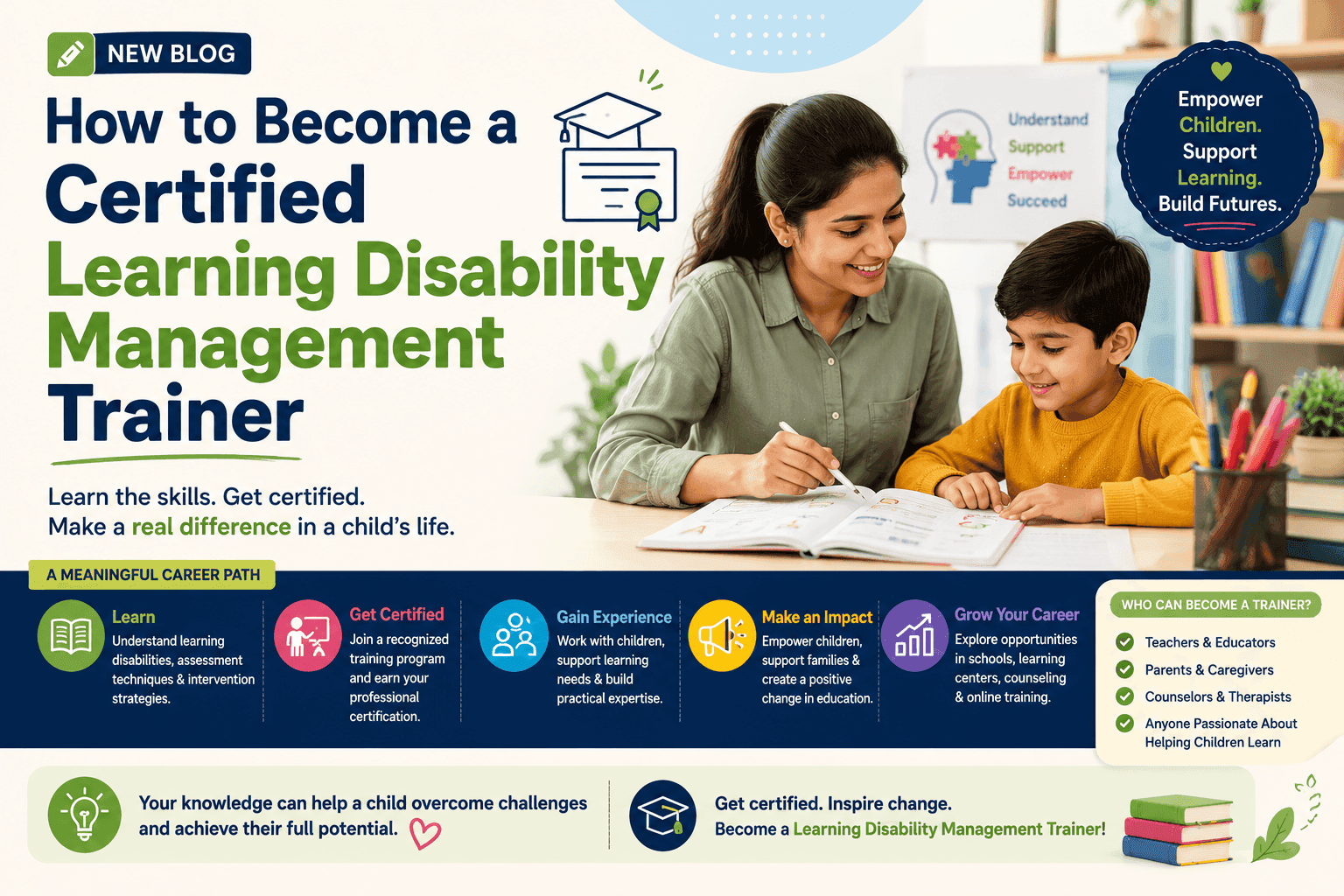
In today’s educational world, the need for trained professionals who can support children with learning difficulties is growing rapidly. Many children face challenges in reading, writing, concentration, communication, or academic performance, and they require proper guidance from skilled educators and trainers. Becoming a Certified Learning Disability Management Trainer is a meaningful career path that allows you to support children, guide parents, and contribute positively to the education sector.
What is Learning Disability Management?
Learning Disability Management focuses on identifying, understanding, and supporting children who face difficulties in learning. These challenges may include problems with reading, writing, spelling, attention, memory, or communication skills. Proper training helps educators understand children’s unique learning needs and provide effective teaching methods and support strategies.
Why is This Career Important?
The number of children needing special learning support is increasing worldwide. Schools, tuition centers, therapy centers, and parents are actively looking for trained professionals who can help children overcome learning challenges. A certified trainer can make a major difference in a child’s academic confidence and overall development.
Skills Needed to Become a Trainer To become a successful Learning Disability Management Trainer, you should develop:
Patience and empathy toward children Strong communication and teaching skills Observation and assessment abilities Understanding of child psychology and behavior Problem-solving and counseling skills
These qualities help trainers work effectively with both children and parents.
Steps to Become a Certified Learning Disability Management Trainer 1. Learn About Learning Disabilities
Start by understanding common learning difficulties such as dyslexia, ADHD, dysgraphia, and slow learning challenges. Learning the basics helps build awareness about children’s educational needs.
2. Join a Certified Training Program
Enroll in a professional Learning Disability Management course from a recognized institution. A proper certification program teaches assessment techniques, intervention strategies, classroom management, counseling methods, and practical teaching approaches. 3. Gain Practical Experience
Hands-on experience is very important. Practical training sessions, internships, or working with children directly will help improve your confidence and professional skills.
4. Develop Communication Skills
As a trainer, you will work closely with parents, teachers, and students. Strong communication skills help in explaining challenges, progress, and support methods clearly.
5. Continue Learning
Education methods continue to evolve. Attend workshops, seminars, and advanced training programs regularly to improve your knowledge and stay updated with modern teaching strategies.
Career Opportunities
After certification, you can work as:
Learning Disability Management Trainer Special Educator Child Development Trainer Academic Support Coordinator Educational Counselor Online Learning Support Trainer
Many trainers also start their own learning support centers or provide online consultation services. Benefits of This Career Opportunity to make a positive impact on children’s lives Growing demand in schools and educational institutions Flexible career opportunities online and offline Personal satisfaction through helping children succeed Possibility to start independent educational services Conclusion
Becoming a Certified Learning Disability Management Trainer is more than just a career — it is an opportunity to support children in reaching their full potential. With proper training, dedication, and compassion, you can become a skilled professional who creates meaningful changes in the lives of students and families. As awareness about learning difficulties continues to grow, this field offers excellent career opportunities and the chance to contribute positively to society.